01
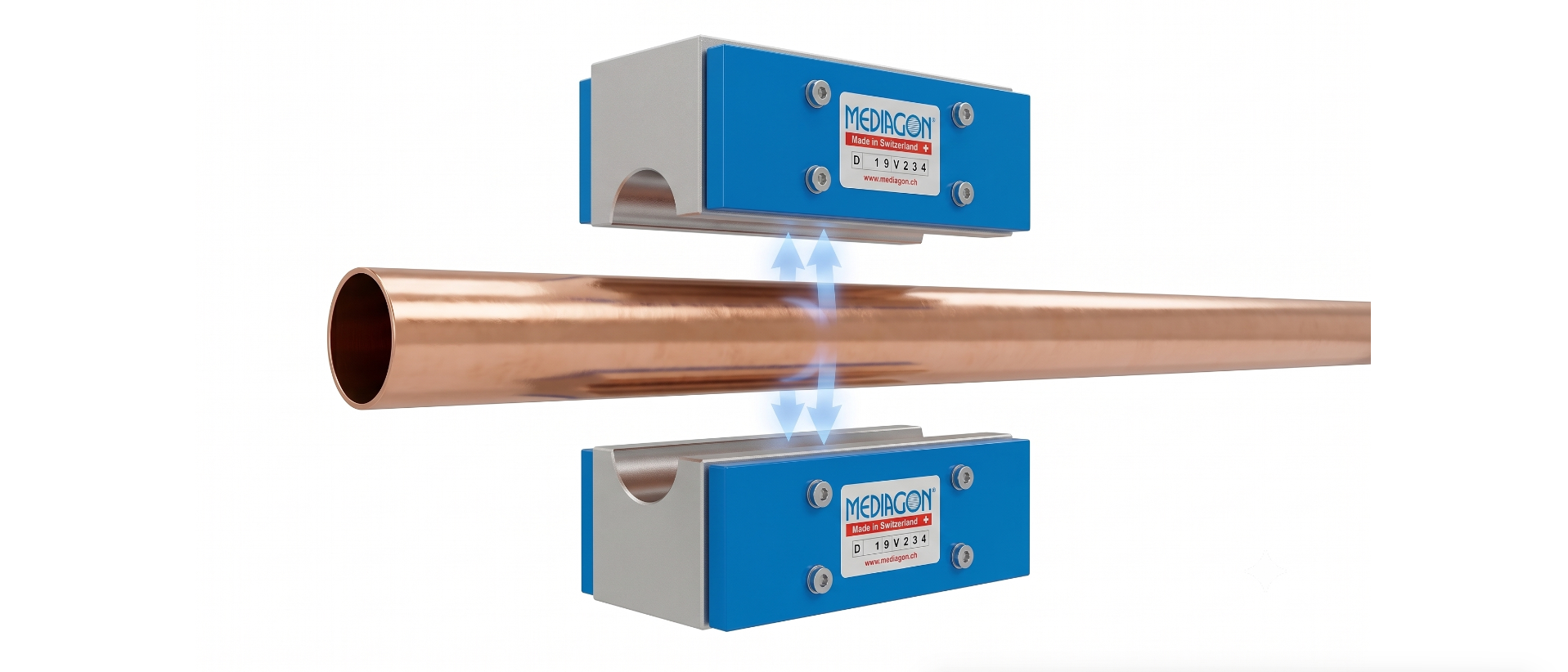
The device is fitted around the pipe
The pipework is not turned into a treatment station. MEDIAGON works from outside the pipe.
Compact · no tank · no consumables
MEDIAGON addresses limescale build-up without removing calcium and magnesium from the water and without the operating constraints of a salt softener.
A simple visual overview before looking at the physical mechanism in detail.
The pipework is not turned into a treatment station. MEDIAGON works from outside the pipe.
Compact · no tank · no consumablesMEDIAGON relies on a static physical action around the pipe as water flows through it.
No injection · no electricityThe technology is designed to influence nucleation and crystallisation of carbonates present in the water.
Minerals remain in the waterDirected crystallisation changes the behaviour of carbonates in the water. They remain in a non-adherent form, preventing lasting build-up on pipes and equipment.
Surfaces protected over timeA softener changes water hardness and requires recurring operating logistics. MEDIAGON acts on scaling with much simpler operation.
The treatment works, but several items must be managed on a daily basis.
The device works around the pipe, with no consumables and no regeneration cycle.
MEDIAGON is fitted around the pipe: water continues to flow through the existing pipe without passing through an added in-line device.
Its principle is based on specific alloys and static fields, with the aim of promoting mineral crystallisation within the water rather than adherent deposits on surfaces.
Calcium and magnesium remain in the water. MEDIAGON targets scaling; it is not designed to reduce water hardness.
The system requires no electrical connection.
Its technological core uses a precision alloy of aluminium, copper and silicon. During manufacturing, heat treatment and molecular pressing permanently fix polarised micro-domains.
The housing therefore acts as a continuous emitter of multipolar static fields, using only its own surface potential.
The device is fitted directly around the incoming water pipe, without cutting the pipework or altering the plumbing.
Static field lines pass through the pipe wall by induction. Millimetre adjustment of the two half-shells eliminates air gaps and ensures optimal energy transfer to the moving fluid.
Whether the pipe is copper, steel, stainless steel or a polymer material such as multilayer pipe or PEX.
In conventional hard water, calcium and carbonate ions are isolated by a thin protective water layer and can precipitate rapidly under thermal shock to form adherent calcite.
As the water passes through the device's static field, this barrier is subjected to an electrostatic force that weakens it.
Once released, the ions combine directly within the water flow, without contacting the pipe walls.
Forced to combine in a moving flow under kinetic disturbance, the atoms do not have time to form compact calcite. They stabilise in a metastable state: aragonite.
This crystalline structure appears as friable microscopic needles.
Unable to agglomerate, this microscopic powder remains suspended and leaves naturally with the water. Plate heat exchanger performance is therefore preserved.
The treatment also has a curative action on installations that are already scaled.
First, the gentle mechanical erosion of aragonite micro-needles helps sweep existing scale.
Second, the altered crystalline balance of the water flow weakens old calcite. It loses adhesion, cracks and is progressively removed without releasing CO₂ microbubbles (pH unchanged).
The technology should not only be described: it should be considered alongside available tests and real installations.

Present the test context, observed surfaces and the differences between a reference installation and an equipped installation.
View the TÜV source ↗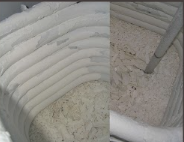
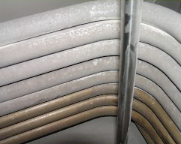
Same installation, using only the two pipe views already shown on the home page. They illustrate the industrial case presented by CO2H2O.
See projects →MEDIAGON is not a salt softener. Its role is to change limescale behaviour to protect the installation while keeping naturally occurring minerals in the water.
Calcium and magnesium remain present. If the objective is softened water, that is a different treatment requirement.
MEDIAGON agit sur l’entartrage, pas sur la dureté mesurée.Minerals remain in the water, so a white trace may still appear on a surface after drying.
La différence recherchée est un résidu non adhérent, plus facile à éliminer.Pipe diameter, material, temperature, flow rate and use determine the correct model and installation position.
CO2H2O valide la configuration avant installation.Once you understand how it works, choose your application to continue with the most relevant path.
Compare MEDIAGON with a softener and assess your domestic installation.
Discover the home solution →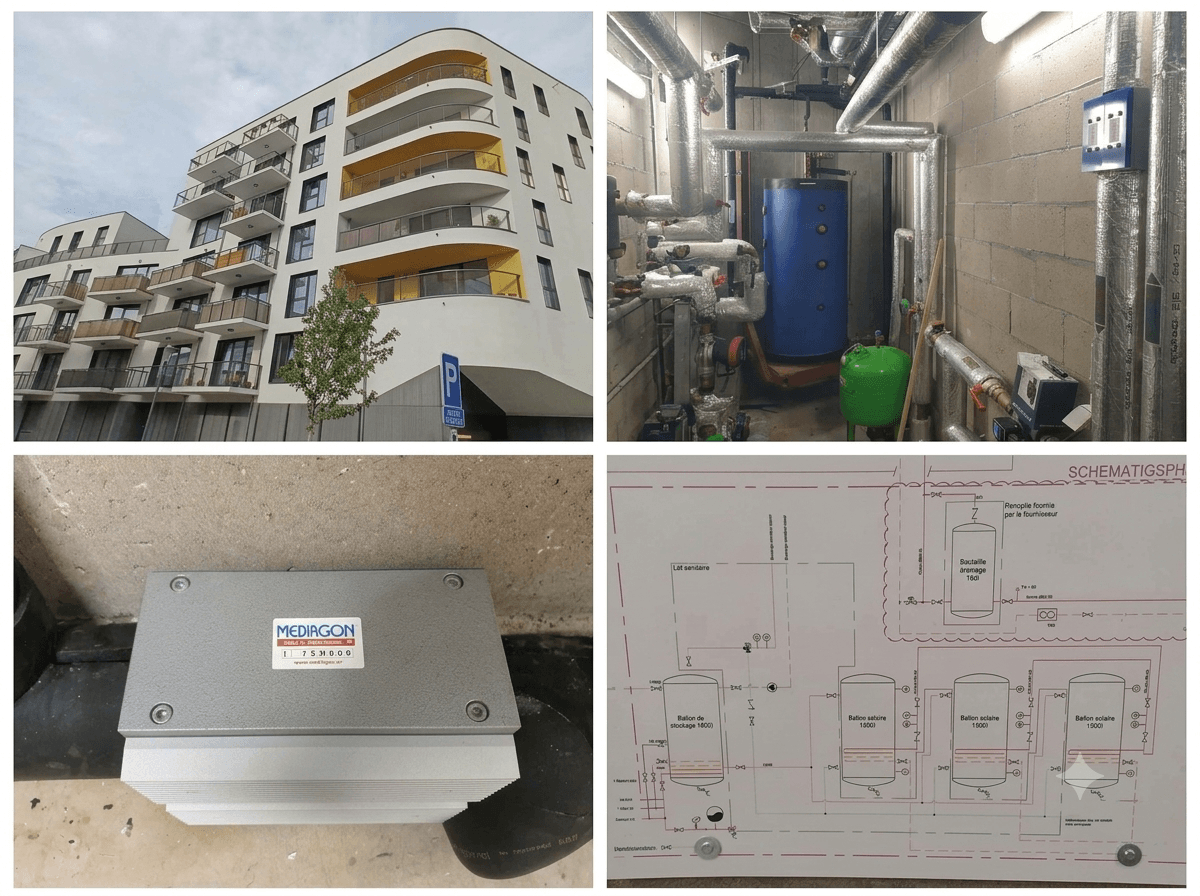
Cold water, domestic hot water production, heat exchangers and shared installations.
Discover the building solution →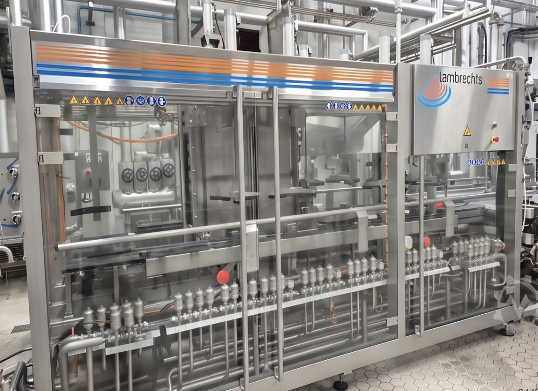
Equipment, maintenance, OPEX and operating constraints.
Discover the industrial solution →No. The minerals remain in the water. MEDIAGON targets scaling; it does not produce softened water.
No. Hardness is not reduced as it is with an ion-exchange softener.
The device is installed around the pipe. Feasibility and the appropriate model are checked according to pipe diameter and configuration.
MEDIAGON operates without salt, without consumable refills and without an electrical supply.
A softener reduces hardness by ion exchange. MEDIAGON keeps the minerals in the water and acts on their crystallisation to prevent lasting adhesion to surfaces.
The principle is the same, but sizing, constraints and useful information vary by context. Choose your path to go directly to the most relevant page.